Why Real Software Engineers Are Not Panicking About AI Replacing Programmers
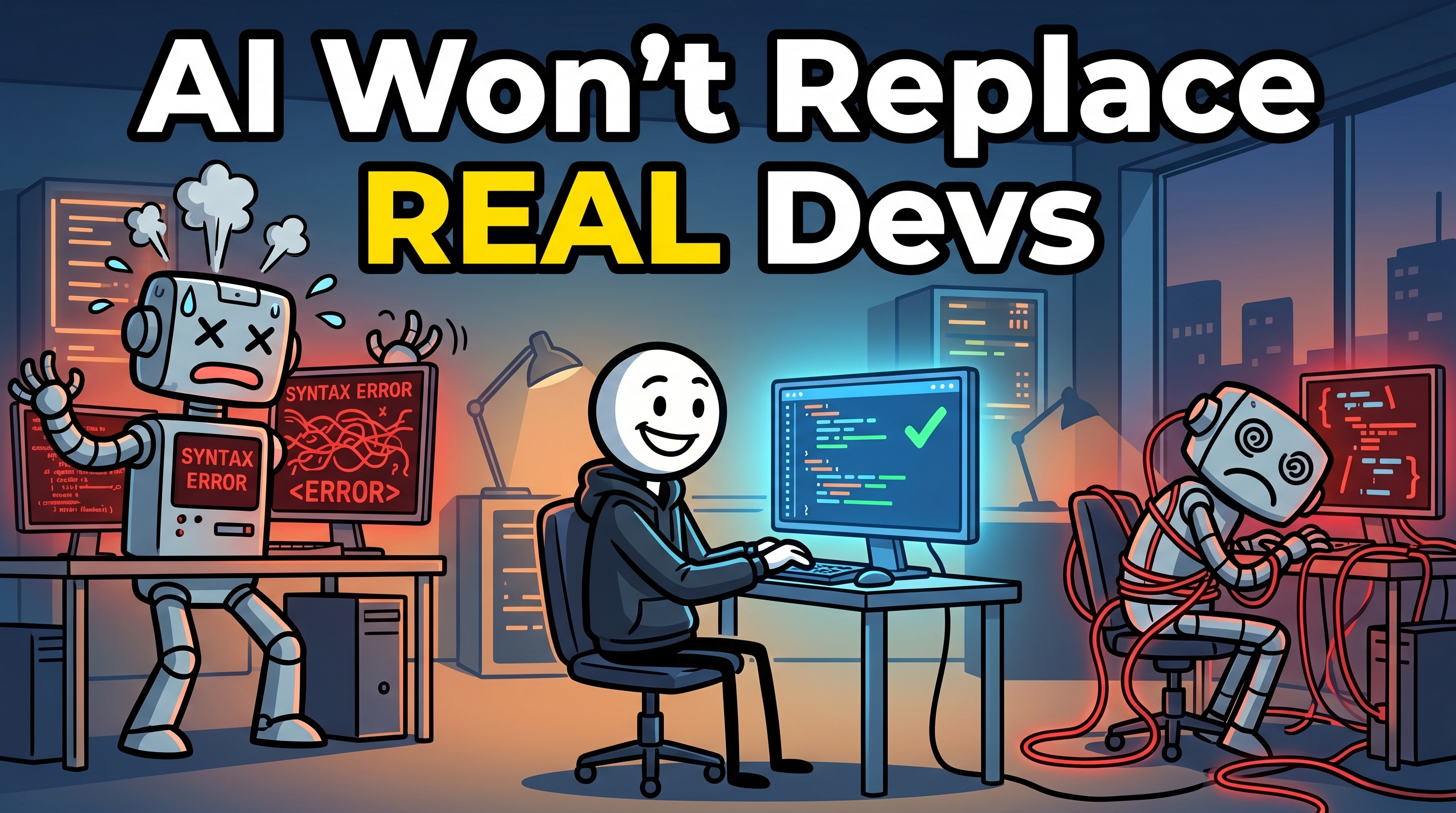
Artificial Intelligence is everywhere right now. Every day, social media is filled with people claiming that AI will replace software engineers completely. At the same time, others argue nonstop about coding standards, clean architecture, and whether developers should even use AI tools at all.
But while the internet is busy fighting over hype and fear, some of the most respected programmers in the world are focusing on something much more important: the future of real software engineering.
Recently, two legendary figures in programming shared their thoughts about AI-generated code and the future of development. Surprisingly, neither of them seemed worried about the dramatic headlines dominating the tech industry.
Instead, they focused on what truly matters: building reliable software, mentoring new developers, and maintaining strong engineering principles.
Their perspective offers valuable lessons for every programmer today.
The Voices Behind the Discussion
One of these developers is Bjarne Stroustrup, the creator of the C++ programming language. He developed C++ while working at Bell Labs, one of the most influential engineering labs in history.
Bell Labs helped create technologies that changed the world, including Unix, the C programming language, and the transistor.
The second developer is Andrew Kelley, creator of the Zig programming language.
Unlike many startup founders chasing rapid growth and billion-dollar valuations, Kelley built Zig with a different philosophy. He has openly stated that he prefers keeping his team small and focused rather than turning the project into a massive corporation.
That mindset alone already feels refreshing in today’s AI-driven tech world.
Why Some Open Source Projects Are Rejecting AI-Generated Code
Andrew Kelley recently made headlines after banning AI-generated contributions from the Zig project.
The reason was simple: many AI-generated pull requests created more problems than solutions.
Instead of helping maintainers, these submissions often wasted valuable review time. Open source projects already struggle with limited maintainers and hundreds of pending contributions. Poor-quality AI code only increases the workload.
But the real issue goes deeper than code quality.
Kelley explained that reviewing contributions is not just about accepting patches. It is also about mentorship.
Every code review is an opportunity to help someone improve their skills. Over time, occasional contributors can grow into trusted developers who understand the project deeply.
This process is extremely important for the future of software engineering.
If companies and open source projects stop investing in junior developers, the industry could face serious talent shortages in the future.
A senior engineer does not magically appear overnight. Every experienced developer started as a beginner who received guidance from others.
AI Can Generate Code — But Can It Build Great Software?
Interestingly, Bjarne Stroustrup is not against automation at all.
In fact, much of his career has focused on allowing machines and compilers to handle more complex work automatically.
He believes developers should work at a higher level while compilers optimize performance behind the scenes. This philosophy helped shape modern C++.
So when someone like Stroustrup raises concerns about AI-generated code, people should pay attention.
His main concern is that AI models learn from existing codebases. That means AI often reproduces old coding patterns, outdated practices, and inefficient solutions.
In other words, AI tends to imitate the past instead of pushing software engineering forward.
Another issue is predictability.
When a human developer changes code, the modifications are usually focused and understandable. But with AI-generated code, even small prompt changes can produce completely different outputs.
That makes debugging and verification far more difficult.
The Hidden Problem With AI-Generated Code
One major problem many developers are noticing is code bloat.
AI often generates far more code than necessary for simple tasks.
A recent example involved the JavaScript runtime project Bun. During an AI-assisted rewrite from Zig to Rust, the codebase reportedly expanded dramatically.
Although most tests passed successfully, developers later discovered serious technical debt hidden underneath the generated code.
In several areas, the AI heavily relied on Rust’s unsafe keyword to bypass important safety guarantees.
For experienced engineers, this raised concerns because Rust’s biggest advantage is its strict memory safety system. Excessive use of unsafe defeats much of that protection.
This situation highlights an important truth:
Passing tests does not always mean the code is healthy, maintainable, or well-designed.
The Biggest Threat Is Not AI — It’s the Lack of Future Developers
Both Stroustrup and Kelley ultimately agree on the same problem.
The industry is slowly reducing investment in junior developers.
Many companies now prioritize short-term productivity and AI automation over training new engineers.
But this creates a dangerous long-term problem.
If nobody trains beginners today, where will experienced engineers come from tomorrow?
This issue already exists in other industries.
For example, airlines around the world face pilot shortages because becoming a captain requires years of real-world experience and mentorship.
Software engineering could face the same future.
Without proper mentorship, knowledge transfer, and hands-on learning, the next generation of skilled developers may never fully develop.
AI Should Be a Tool, Not a Replacement
Artificial Intelligence can absolutely improve productivity.
It can help developers write boilerplate code faster, automate repetitive tasks, and speed up debugging.
But AI still lacks the deeper understanding required for designing large systems, mentoring teams, making architectural decisions, and maintaining long-term software quality.
The best developers understand that software engineering is not only about writing code.
It is about solving problems, communicating ideas, reviewing trade-offs, and building systems that people can trust for years.
AI may assist with coding, but real engineering still depends heavily on human judgment and experience.
Final Thoughts
The internet often makes it seem like AI will instantly replace all programmers overnight.
But experienced software engineers see the situation differently.
They understand that technology always changes, but strong engineering principles remain valuable.
The future will likely belong to developers who know how to combine AI tools with real programming knowledge, critical thinking, and practical experience.
Instead of fearing AI or blindly trusting it, developers should focus on becoming better engineers.
Because in the end, the companies and projects that succeed will still need people who truly understand how software works.
And no prompt alone can replace that.