AI Coding Agents Are Making Developers Forget How Software Works
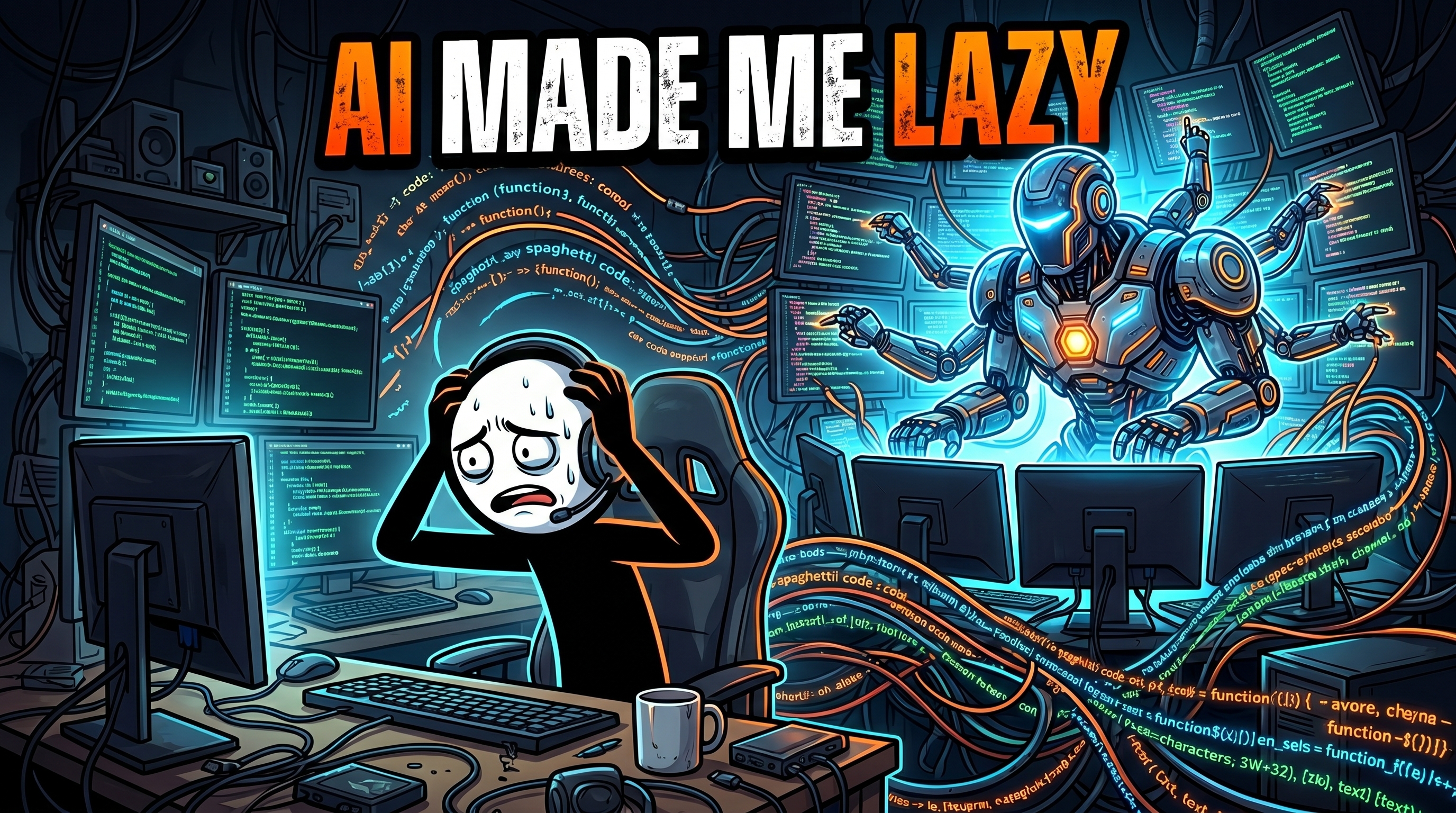
A few months ago, I started using AI coding agents seriously in day-to-day development instead of treating them like a novelty.
Not because I believed the hype.
Mostly because avoiding them stopped being practical.
By early 2026, AI-assisted development had quietly shifted from “interesting experiment” to “expected workflow” in a lot of companies. Teams began optimizing around output speed. Managers wanted faster delivery cycles. Product people loved seeing features appear overnight. And developers, exhausted from endless deadlines, started handing over more responsibility to the machine.
After using these tools heavily for both work and personal projects, I’ve realized something uncomfortable:
The biggest risk isn’t that AI writes bad code.
It’s that developers slowly stop understanding the systems they’re building.
The Real Problem Isn’t Code Quality
Most conversations about AI-generated code miss the point.
People love posting screenshots of broken outputs or bizarre bugs as proof that coding agents are useless. That criticism feels outdated now. Modern models are often good enough to produce convincing implementations, especially for routine application work.
That’s exactly why this is becoming dangerous.
The code usually looks reasonable at first glance. It compiles. The UI renders. Tests sometimes even pass. For short-term productivity, the experience feels incredible.
But software quality is not determined by whether code “looks correct.”
The real question is whether the developer still understands the architecture after weeks or months of AI-assisted iteration.
That’s where things begin to fall apart.
I noticed this pattern in my own workflow surprisingly fast.
At first, I reviewed every generated change carefully. Small refactors. Isolated fixes. Tiny helper functions. Everything stayed manageable.
Then the trust creep started.
You accept a slightly larger diff because the feature seems straightforward. A few days later, you approve several hundred generated lines because “the app still works.” Eventually, reading the entire output starts feeling slower than simply prompting again.
That’s the trap.
AI coding agents are optimized for momentum, not comprehension.
And momentum is addictive.
AI Makes Technical Debt Feel Invisible
One of the strangest side effects of AI-assisted development is how effectively it hides architectural decay.
In traditional development, messy systems usually reveal themselves through friction. Developers feel pain when modifying bad abstractions. They hesitate before touching fragile modules. Complexity slows people down naturally.
AI changes that feedback loop.
Instead of understanding the system deeply, developers describe symptoms and let the model patch around them. The tool keeps generating new layers on top of existing layers until the codebase becomes a pile of loosely connected fixes.
The scary part is that this process often feels productive while it’s happening.
A bug appears.
You prompt the agent.
It rewrites five files.
The issue disappears.
You merge the change.
Repeat that cycle for a few weeks and suddenly nobody fully understands the implementation anymore — including the person responsible for maintaining it.
I recently saw an engineer describe exactly this situation after building a Kubernetes terminal application with heavy AI assistance. The project started clean and manageable. Over time, the agent kept solving problems locally without preserving any coherent structure globally.
The result was predictable:
- giant state objects
- massive switch statements
- unrelated responsibilities merged together
- functions nobody wanted to touch manually
The codebase technically worked, but understanding it became painful.
That story resonated with a lot of experienced developers because many of us are quietly seeing the same pattern emerge in real projects.
Senior Developers Are More Vulnerable Than Juniors
There’s a common assumption that inexperienced developers are the biggest victims of AI-generated code.
I’m not convinced that’s true anymore.
Junior developers at least know they’re learning.
Senior developers are more likely to become overconfident passengers.
That’s the part people rarely discuss openly.
Experienced engineers are exhausted right now. Many are dealing with constant pressure to move faster while simultaneously being told that AI can replace half their workflow. In that environment, it becomes very tempting to stop thinking deeply and start optimizing for throughput.
You stop opening the implementation details.
You skim diffs instead of reviewing them.
You trust the generated abstraction because deadlines matter more than elegance.
Eventually, the IDE becomes secondary to the chat interface.
And once that happens, your relationship with software changes completely.
You’re no longer engineering systems.
You’re supervising outputs.
That distinction matters more than most people realize.
Why AI-Generated Code Feels So Convincing
The reason coding agents are succeeding is the same reason AI-generated writing succeeds.
The output sounds correct before it proves itself correct.
You can see this outside programming very easily.
Ask an LLM to generate a generic YouTube introduction and it will produce something grammatically clean, emotionally neutral, and structurally familiar. It resembles content written by humans without carrying much genuine perspective behind it.
Generated code works similarly.
The implementation often mirrors patterns the model has statistically observed across millions of repositories. The syntax looks professional. Variable names feel reasonable. The structure resembles real software.
But software engineering is not pattern matching alone.
Good systems require intentional tradeoffs:
- understanding future maintenance costs
- controlling complexity growth
- designing boundaries carefully
- knowing when not to abstract
- recognizing hidden coupling
- predicting operational consequences
AI models imitate these decisions surprisingly well in isolated contexts.
What they still struggle with is maintaining long-term conceptual integrity across evolving systems.
Humans struggle with that too, honestly. The difference is that humans are supposed to remain accountable for the outcome.
The Industry Is Optimizing for Velocity
A lot of developers privately recognize these issues already.
The problem is that incentives currently reward speed more than understanding.
Shipping faster looks measurable.
Architecture quality usually doesn’t.
When management sees a developer producing five times more visible output with AI assistance, the conversation naturally shifts toward throughput metrics. Nobody wants to be the person arguing that slower, more deliberate engineering might save the company later.
That “later” rarely survives quarterly planning.
So teams continue accelerating.
Meanwhile, codebases quietly accumulate complexity that fewer people genuinely understand.
I don’t think this means AI coding tools are useless. Far from it.
They’re incredibly effective for:
- repetitive implementation work
- boilerplate generation
- scaffolding
- debugging obvious issues
- accelerating exploration
- reducing context-switching fatigue
Used carefully, these tools can absolutely improve developer productivity.
But productivity without comprehension is dangerous in software.
A faster way to create technical debt is still technical debt.
Writing Code by Hand Is Becoming a Niche Skill
The uncomfortable reality is that manual coding is probably no longer the default future for professional software development.
AI assistance is not disappearing.
If anything, the tooling will become more integrated, more autonomous, and harder to avoid inside organizations.
But I suspect something else will happen too:
Developers who continue reading and writing code deeply — even when automation makes it optional — will become disproportionately valuable.
Not because typing syntax matters.
Because understanding systems matters.
There’s a huge difference between:
- generating code
- recognizing whether the generated system is healthy
That second skill still requires real engineering judgment.
Personally, I’ve started spending more time revisiting lower-level programming concepts again. Not because I’m nostalgic, but because I don’t want my understanding of software to collapse into prompt engineering habits.
The industry seems increasingly comfortable with treating code as disposable.
I’m not convinced software becomes easier to maintain just because humans stop reading it.
If anything, the opposite may be true.